

Blog
Case studies, strategies, and ideas shaping modern technology.
The AI Reviewer’s Hangover: Why Your Engineers Are Exhausted and How to Fix It
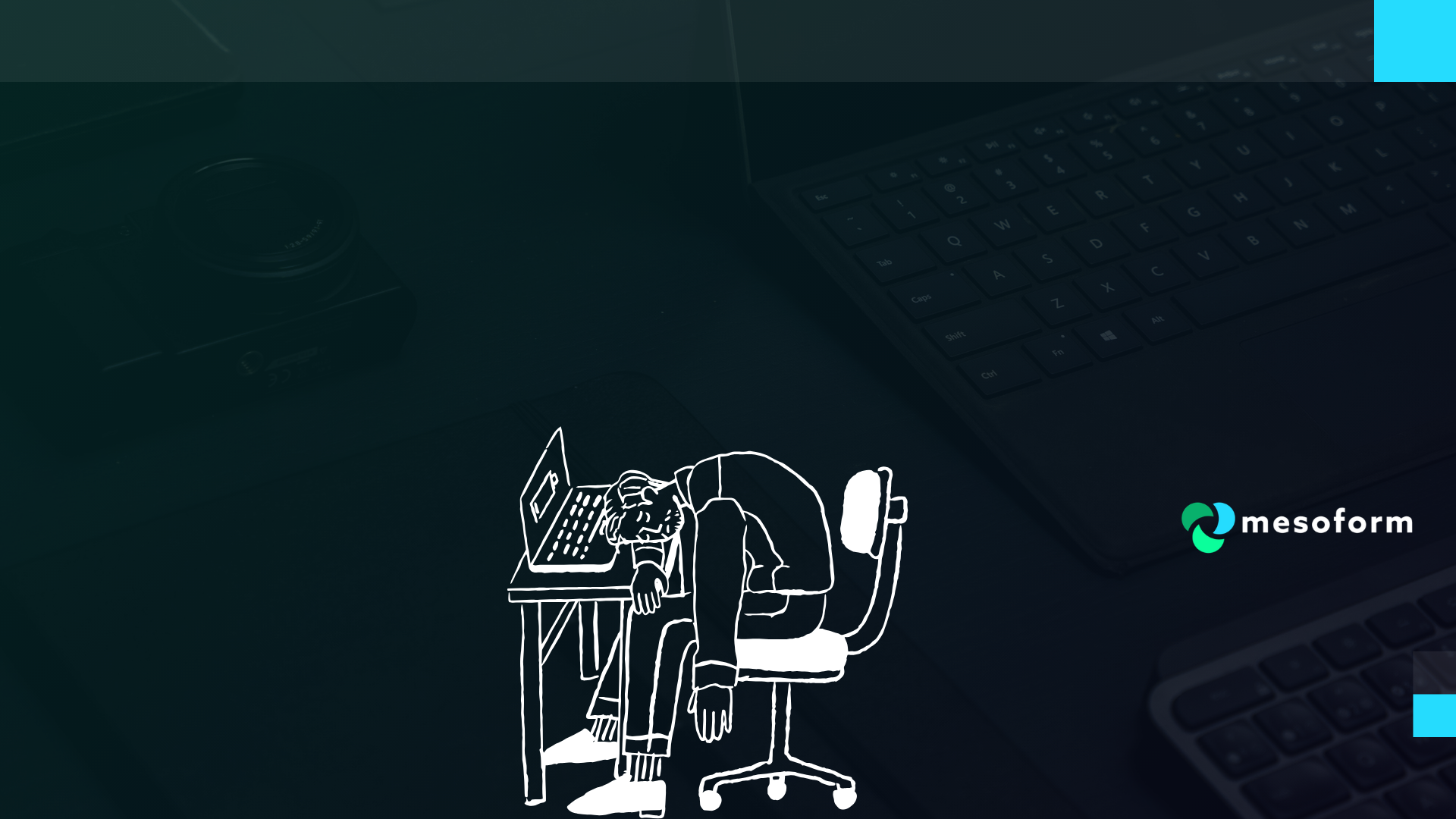
Let’s be honest for a second.
You’ve rolled out Cursor, Claude Code, or Copilot across your engineering org. Your developers are buzzing. Pull request volume is up 50%. Code is flying out of terminal windows at speeds that would make a 90s hacker movie look slow. On your executive dashboard, the throughput charts are pointing up and to the right.
So why does your engineering team look like they haven’t slept since Tuesday? And why are subtle, bizarre logic bugs suddenly leaking into production?
Welcome to the AI Review Hangover.
While everyone is celebrating how fast AI agents can write code, almost no one is talking about the brutal tax it extracts from the humans who have to review it.
We took a deep dive into the research surrounding decision fatigue, cognitive load, and human-automation bias. What we found confirms what engineering managers and developers have been feeling intuitively: we are pushing human reviewers far past their biological limits, and it is creating a systemic disaster waiting to happen.
Here is what is actually going on under the hood of your AI-assisted dev workflow, and how we fix it.
1. "AI Brain Fry" Is Real (And It's Biological)
If you think code review fatigue is just developers complaining about reading extra pull requests, think again. It is a physical, metabolic limitation of the human brain.
A study published in Harvard Business Review surveyed nearly 1,500 technology workers and found that 14% were suffering from acute "AI brain fry" (Vellum, 2026). The strain didn't come from writing prompts; it came from the continuous, high-stakes auditing of non-deterministic machine outputs (Pekaric, 2025). Workers suffering from this oversight fatigue showed a 33% increase in decision fatigue (Danziger, 2011), an 11% increase in minor errors, and a 39% jump in major catastrophic errors (Parasuraman, 1997, 2026; Danziger, 2011).
Neuroscientists found out why: when you exert intense cognitive control (like hunting for subtle edge-case bugs in 1,000 lines of AI diffs), glutamate accumulates in your prefrontal cortex. To protect itself from metabolic overload, your brain inflates the perceived cost of mental effort (Wiehler et al., 2022).
In plain English? Your brain actively forces you to take cognitive shortcuts.
It is the exact same reason why a famous study on judicial parole boards showed that judges approved parole 65% of the time first thing in the morning, but dropped to nearly zero percent right before lunch (Danziger, 2011); (Wiehler et al, 2022). When the judges' mental energy was spent, they defaulted to the easiest status quo choice (deny parole).
For an exhausted developer reviewing their 15th AI pull request of the day at 4:30 PM, the path of least resistance isn't denying the PR. It's hitting Approve and muttering the ultimate developer lie:
"Eh, the agent probably got it right."
2. The 30-Minute Vigilance Trap
Human beings are naturally terrible at passive monitoring. Decades of human factors research prove that after just 30 minutes of continuous visual monitoring, our signal-detection sensitivity plummets (Pekaric, 2025).
Because AI-generated code looks syntactically pristine and passes basic unit tests, the real bugs (concurrency race conditions, boundary failures, security permission gaps) act as rare, hidden targets (Wen, 2026); (Naito, 2026).
Combine that with the fact that developers are now juggling 3 to 5 parallel AI agent threads at once. Research on attention residue shows that every time you toggle between tabs, a piece of your cognitive processing remains stuck on the last task (Get Alfred, 2024); (Leroy, 2009). With knowledge workers context-switching up to 1,200 times a day (Meyer, 2021), executive working memory simply collapses (Get Alfred, 2024).
Reviewers inevitably split into two failure modes:
- The Rubber-Stamper: Drowning in PR queues, they glance at the diff, see clean formatting, and ship it (Soni, 2005).
- The Microscoper: Burned once by an AI bug, they spend three times longer auditing AI diffs than human code, destroying sprint velocity and burning out senior talent (Ganglani, 2026).
3. The Great "Time-Warping" Delusion
Here is a scenario every Engineering Manager and CTO will recognise.
Before AI tools, if a developer was handed an architectural problem with complex, unknown edge cases, everyone understood that it was going to take time. The difficulty curve was legible.
Enter vibe coding (Aiersilan, 2026). An AI agent spits out 500 lines of complex TypeScript in 4 seconds.
Suddenly, managers and developers fall prey to a shared temporal delusion: "Because the code was generated instantly, the feature should be done today!"
This time-warping delusion completely ignores the unpredictable, non-deterministic tail of AI development (Ganglani, 2026); (AMUX, 2026). You have no baseline to know if the agent solved the problem cleanly or injected subtle assumption gaps into your database models (Naito, 2026); (Wen, 2026). When the code inevitably breaks in staging, diagnosing and refactoring synthetic code takes 91% longer than fixing human-written code (Ganglani, 2026).
Repository analysis reveals the sobering reality of unguided AI speed
- Bug Density: Up 54% to 67% per pull request (Harding, 2025).
- Copy-Pasted Code: Up 48% (Harding, 2025; AMUX, 2026).
- Code Refactoring: Down 60% (agents default to duplicating blocks rather than clean abstraction) (AMUX, 2026).
- Actual Net Velocity: Down 19% once rework and debugging are factored in (Ganglani, 2026).
We didn't eliminate the software bottleneck. We just moved the traffic jam from writing code to reviewing and debugging it (Ganglani, 2026).

4. How Mesoform Solves the AI Decision Fatigue Crisis
You cannot discipline your way out of biological cognitive limits. To harness the power of AI agents without eroding your codebase or destroying your team, you need structural platform guardrails, tailored AI contexts, and a fundamental cultural shift (Naito, 2026; Wen, 2026).
Here is how Mesoform addresses the crisis:
A. Shift Down, Not Left: Declarative Guardrails & Golden Paths
Traditional wisdom tells engineering teams to "shift left" – putting more compliance and security checks onto the developer's plate (Parasuraman, 1993, 2010). In an AI agentic world, shifting left just drowns human reviewers in verification fatigue (Parasuraman, 1993, 2010; Vellum, 2026).
At Mesoform, we shift down into the platform layer. By combining declarative infrastructure guardrails (using policy engines and custom resource controllers) with pre-architected Golden Paths on Internal Developer Platforms (IDPs), compliance and architectural boundaries are enforced automatically. Non-compliant manifests or policy violations are caught and blocked at the platform layer even if a human reviewer inadvertently approves a bad PR (caveat: this will never catch everything – we’re working on even better ways for the future – but they are a great foundation that everyone can agree and collaborate on).
B. Creating Custom Agent Profiles and Domain Skills (e.g. Gemini Custom Agents)
Generic prompts encourage "assumption injection," where LLMs silently introduce unverified assumptions into your codebase (Naito, 2026; Wen, 2026). To stop agents from drifting into bad habits, engineering teams must build structured custom agent profiles and domain skills (AMUX, 2026).
For example, you can build a custom Gemini Agent Profile pre-configured with your organisation's exact system context, API rules, and security guidelines. By defining strict system instructions, workspace constraints, and custom skills within the Gemini profile, the agent is forced to operate strictly within your architectural bounds. It stops hallucinating non-standard libraries and stops making bad assumptions, taking massive verification pressure off your human reviewers.
C. Hiring for Critical Thinking over Syntactic Speed
As AI tools commoditise code generation, an engineer's primary value shifts from raw typing speed to critical thinking, systemic problem-solving, and decision-making under uncertainty (Harding, 2025; Ganglani, 2026).
At Mesoform, our recruitment philosophy has always focused heavily on prioritising these higher-order cognitive skills. Practical coding exercises and system design discussions remain essential parts of our interviewing process, but the focus is firmly on evaluating a candidate's underlying analytical approach (Harding, 2025); (Ganglani, 2026). We assess how candidates reason through trade-offs, interrogate ambiguous specifications, and challenge unverified assumptions (Wen, 2026). Hiring active problem-solvers builds the cognitive resilience needed to resist passive rubber-stamping (Danziger, 2011); (AMUX, 2026).
D. Pod Restructuring, WIP Limits, and the Cultural Reality Check
To protect executive working memory, teams should restructure into focused pods, enforce strict Work-In-Progress (WIP) limits per developer, and batch PR reviews into dedicated focus windows (Get Alfred, 2024; Meyer, 2021).
However, let us be completely clear: declarative platform guardrails, custom Gemini profiles, and WIP limits are not a golden ticket.
No set of platform tools or AI configurations will magically save your organisation if your workplace culture demands unrealistic speed at the expense of cognitive health (Vellum, 2026; Harding, 2025). True engineering resilience requires genuine cognitive and cultural shifts (Vellum, 2026). Leadership must actively respect deep-work blocks, adjust delivery expectations to account for non-deterministic review tails, and foster a culture where engineers are encouraged to pause, rest, and thoroughly interrogate AI outputs without fear of slowing down arbitrary metrics (Ganglani, 2026; Harding, 2025).
Take the Next Step with Mesoform
AI agents are incredible tools, but they require an operating model designed for human cognitive ergonomics (Ganglani, 2026).
- Read the Full White Paper: Want the complete academic data, Signal Detection Theory metrics, and neuro-metabolic models? Download our formal White Paper here.
- Transform Your Platform: Ready to build developer-first Golden Paths and eliminate review bottlenecks? Explore Mesoform’s Platform Engineering Solutions.
- Subscribe to Our Newsletter: Stay ahead of the curve with pragmatic insights on DevOps, MLOps, and AI-native engineering workflows.
Ready to take the next step? Let’s build something extraordinary together.
Contact the Mesoform team today at
