

Blog
Case studies, strategies, and ideas shaping modern technology.
Practical Sprint Management Processes That Actually Work

As we kick off 2026, it’s the perfect time to rethink how we run sprints. No matter how experienced a team is, sprints rarely go exactly as planned.
Unexpected issues arise: build failures, broken integrations, unclear requirements, production bugs, or tasks that quietly consume far more time than expected. Left unmanaged, these problems derail delivery, inflate technical debt, and frustrate teams.
At Mesoform, we’ve spent the past year refining how we manage sprints in real-world conditions. In this article, we share both widely used practices and Mesoform-specific process innovations that make sprints more predictable, efficient, and far less stressful.
Article Written by Nipa Patel, Business Admin at Mesoform
The Basics You Already Know
Chances are, you’re already familiar with the core sprint routines:
- Sprint Planning: Deciding what to tackle and who’s doing what.
- Daily Standups: Quick check-ins to surface blockers and keep everyone in sync.
- Sprint Review: Showing off what you’ve accomplished and getting feedback.
- Sprint Retrospective: Reflecting on what went well, what didn’t, and what to do differently next time.
These practices are solid, but they aren’t always enough when a critical issue threatens your sprint. That’s where you can step things up.
The Andon Cord: Stopping Work Before Time Is Wasted
Borrowed from lean manufacturing, the Andon Cord empowers anyone on the team to stop work when a serious problem is detected. In software delivery, this doesn’t mean halting everything; it means pausing dependent work to address an issue immediately, before it spreads.
A More Nuanced View: For Mesoform, a Blocker Isn’t Just “Work Cannot Continue”
In many teams, a blocker is defined too narrowly as “work cannot continue.” In practice, the bigger risk is often time being burned without meaningful progress.
This is why we use a time-based definition:
If a developer has spent more time than makes sense (or has hit diminishing returns) and progress is still unclear, that’s an Andon Cord moment.
This helps prevent silent thrashing: work that technically continues, but produces little value and quietly damages sprint predictability.
Examples of when to pull the cord:
- A production bug blocking a release or critical feature.
- A failed build or broken CI/CD pipeline preventing deployment.
- A malfunctioning API or integration causing cascading disruption.
- A task that should take an hour slipping into half a day with no clarity — even if work hasn’t fully stopped.
A real world example:
What happened: Our latest feature branch kept failing CI because a database migration script occasionally timed out. This blocked other devs from merging their work.
What we did: One engineer pulled the Andon Cord, pausing work dependent on the feature. The team investigated, reproduced the issue locally, and debugged the migration script.
How it was resolved: We fixed the script by adding proper indexing and retry logic, ran the tests successfully, and merged the branch. Dependent work resumed without further interruptions, keeping the sprint on track.
What we’ve learned
What worked:
- Surfaces hidden complexity early.
- Prevents guesswork from turning into days of wasted effort.
- Builds a culture where asking for help is normal, not disruptive.
What didn’t at first:
- People hesitated, worried about interrupting others.
- Some issues were escalated too late because they didn’t “feel” critical.
- We had to normalise the behaviour and introduce clear guidelines.
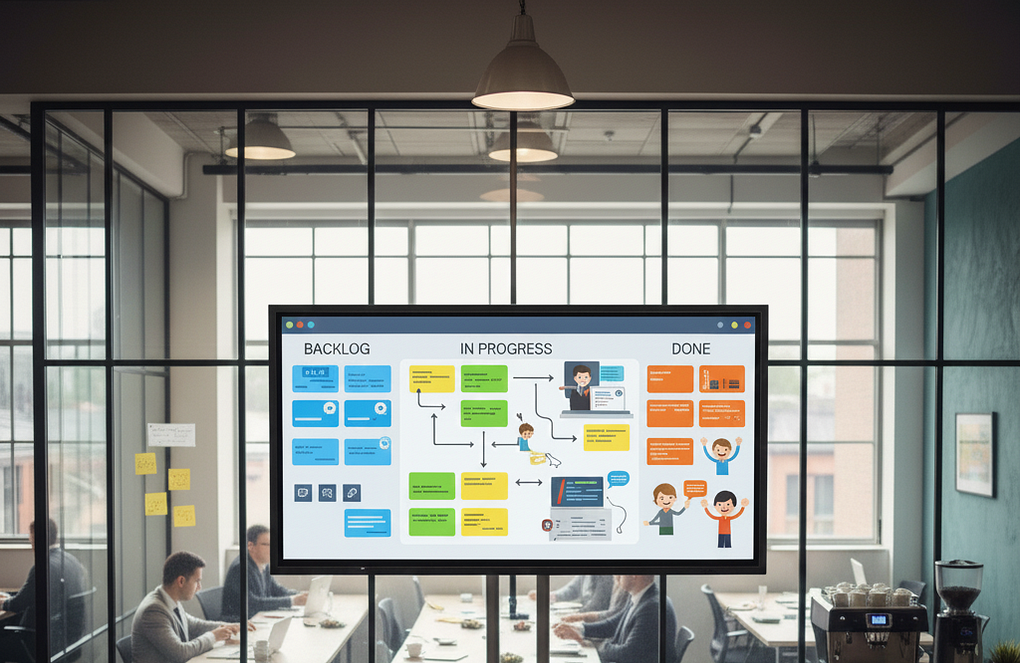
The benefits are clear:
- Prevent technical debt from accumulating. Allowing work to continue around a critical blocker often leads to more complex problems down the line.
- Encourage accountability and visibility. Everyone on the team knows that critical issues are addressed immediately.
- Improve sprint predictability. By addressing problems as they occur, the rest of the sprint can continue with minimal disruption.
The process is straightforward: once the Andon Cord is pulled, the team focuses on diagnosing and fixing the problem. Work resumes only once the issue is resolved and verified, ensuring the codebase remains stable and functional.
Tiger Teams: Focused Problem-Solving
While the Andon Cord is about recognising and halting blockers, some problems are too complex or cross-functional for a single developer to resolve quickly. That’s where Tiger Teams come in.
A Tiger Team is a small, cross-functional group assembled specifically to address a high-priority problem. The goal is clear: solve the problem quickly and efficiently without disrupting the broader sprint.
Tiger Teams coordinate through Tiger Team Calls, which are scheduled once per week on a fixed day (for us, Thursdays) and blocked on the team calendar to ensure availability.
During the week of planning, our Tiger Team Call prioritises demonstrating the acceptance criteria for all closed stories from the last sprint before defining outcomes. In contrast, during the mid-sprint review week, the most significant part of the call is defining actionable outcomes and working to resolve them, with the acceptance criteria demonstration moved to a midday checkpoint rather than the main focus.
These calls are flexible; you can drop in or out depending on your role in the issue, but they provide a dedicated space for alignment, status updates, and problem resolution.

A typical Tiger Team Call includes:
- Problem definition. Clearly explain what’s broken, its impact, and any immediate dependencies.
- Role assignment. Determine who is responsible for each part of the resolution.
- Immediate goals. Define what success looks like during the call.
- Progress updates. Team members share status and blockers while the problem is being addressed.
- Resolution confirmation. Ensure the issue is fully resolved and tested before closing the call.
These calls allow the team to respond rapidly to critical issues while minimising disruption to the broader sprint. They are not status meetings; they are focused problem-solving sessions with a clear purpose and outcome.
Our experience from using them:
What happened: Several pull requests for a new feature were waiting on feedback from multiple reviewers. Without alignment, comments trickled in over two to three days, slowing the team down.
What we did: We held a Tiger Team call: a short, focused session with all relevant engineers. Everyone reviewed the PRs together, discussed questions in real time, and clarified requirements on the spot.
How it was resolved: Feedback was addressed immediately, PRs were approved, and work could continue without delays. The sprint regained momentum, avoiding the usual multi-day bottleneck from asynchronous reviews.
What worked:
- Rapid resolution for cross-disciplinary issues
- Better knowledge sharing and faster root-cause discovery
- Clearer scope, enabling quicker progress on tickets that initially seemed more complex
What didn’t work initially:
- We didn’t clearly define the desired outcomes of the call. Although the goal was to bring people together, we focused on individual objectives instead of explicitly outlining how participants should support one another. As a result, collaboration was weaker than intended.
Mid-Sprint RAG Status for Priority Control
One of our key process additions at Mesoform is a mid-sprint RAG (Red / Amber / Green) status review that happens while there is still time to act.
During this checkpoint, we go through every ticket in the sprint and explicitly label it with a RAG status. This is a conscious, team-level assessment, not an automated metric and not a progress report.
This practice is not reporting for reporting’s sake. It is a deliberate priority reset:
- Green: on track, no intervention needed
- Amber: risk emerging, needs attention or support
- Red: highly unlikely to complete without intervention
Running this mid-sprint helps us answer:
- What must finish this sprint?
- What can move without damage?
- Where do we need to re-focus effort now?
By reviewing each ticket individually, we force clarity on where work truly stands , not where we hope it stands.
Prioritising Work After the RAG Review
Once the review is complete, we immediately focus on Green tasks that are already going too slowly and Amber tasks to see if we can help to turn them into greens with the assistance of others (this is where the second tiger team call comes in). By prioritising them mid-sprint:
- The team ensures near-complete work is delivered on time
- Potential blockers are addressed before they escalate to Red
- Sprint goals are protected without disrupting the flow of Green tasks
Running this mid-sprint RAG review has significantly reduced end-of-sprint surprises. It gives the team visibility, encourages proactive problem-solving, and ensures the sprint remains on track, even when unexpected issues arise.
Estimation with T-Shirt Sizes (Not Story Points)
We also moved away from traditional story points in favour of T-shirt sizing (XS–XL).
Why we prefer it:
- By comparing a new story against one the team has completed before, we can easily decide whether it’s larger or smaller, and by roughly how much. This relative sizing creates consistency across stories and helps the team plan more effectively.
- Focuses the discussion on complexity and time, not abstract numbers
- Teams reach an agreement faster and with more confidence
- Reduces false precision and promotes shared understanding
Each ticket is labelled with a T-shirt size based on expected effort:
- XXS = 0.5 days
- XS = 1 day
- S = 2 days
- M = 5 days
- L = 8 days
- XL = 13 days
- XXL = 21 days
Over time, we’ve moved away from debating abstract point values and instead rely on historical delivery data. We look at what actually fits into a sprint in real terms, for example, we might plan for roughly two Medium tickets, or one Large and one Small, or another similar equivalent. This makes sprint planning far more grounded in reality.
This approach has proven more reliable, less contentious, and much easier to explain than traditional story points, especially for cross-functional teams where clarity and shared understanding matter more than precision on paper.
Retro Reports That Feed the Next Sprint
Retrospectives only matter if outcomes actually change behaviour. At Mesoform, we do retro calls every two weeks and complement them with retro reports to make the insights actionable.
What We Cover in Each Retrospective
During the meeting, the team reflects on:
- Hours lost on tickets: identifying tasks that took longer than expected
- Why it happened: root causes of delays or blockers
- Improvements: how to prevent similar issues in future sprints
- What went well: successes in delivery, collaboration, or processes
- What could be improved: pain points, inefficiencies, or blockers
- Action items: prioritised tasks with clear owners to implement improvements
How We Calculate Sprint Capacity and Budget
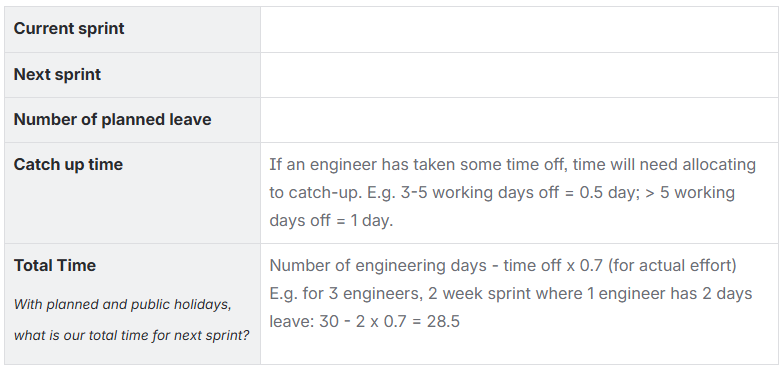
To plan realistically, we calculate a delivery budget for each sprint:
- Base engineering days: number of available working days in the sprint (e.g., 2 weeks = 10 days)
- Planned leave / holidays: any days engineers are off
- Catch-up time: When an engineer has been away, we explicitly plan time for them to get back up to speed before taking on full sprint commitments. This includes reviewing recent changes, understanding decisions made in their absence, and re-establishing context. 3–5 working days off → 0.5 days catch-up. More than 5 working days off → 1 day catch-up
- Adjust for focus factor: multiply the available days by 0.7 to account for other miscellaneous work like meetings, support, or unexpected interruptions
- Subtract rollover work: any tasks carried over from the previous sprint
Formulaically:
Sprint Budget Per Engineer = (Engineering Days — Planned Leave — Catch-up Time) × 0.7 — Rollover Time in Days
This calculation gives the team a realistic view of how much work can fit in the sprint, helping them prioritise tasks, estimate effort with T-shirt sizes, and avoid overcommitment. By including miscellaneous work in the calculation, we plan for the reality of a working sprint, not an idealised one.
Quick-Start Checklist for Smarter Sprints
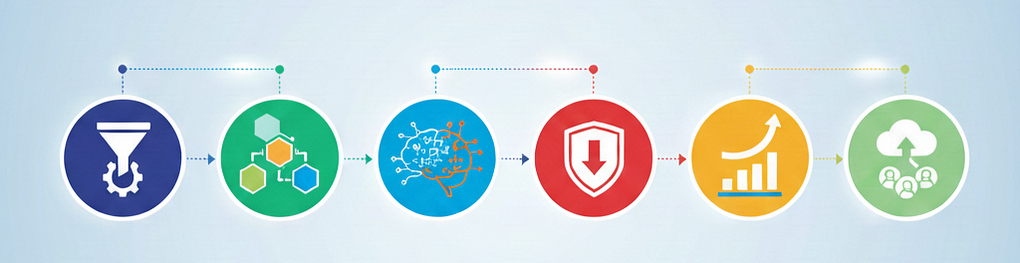
Here’s a simple way to start:
- Define Andon Cord rules: team can stop dependent work when progress stalls or blockers emerge.
- Schedule Tiger Team Calls: weekly cross-functional problem-solving sessions with a facilitator.
- Run Mid-Sprint RAG Review: label every ticket Green/Amber/Red; prioritise Amber tasks immediately.
- Label tickets with T-Shirt Sizes: XXS–XXL for effort; use historical data to plan capacity.
- Calculate Sprint Budget: account for leave, catch-up, miscellaneous work (0.7 factor), and rollover tasks.
- Run Bi-Weekly Retros and Produce Reports: track lost hours, root causes, successes, improvements, and action items.
- Document and Iterate: capture resolutions and lessons learned; refine processes sprint by sprint.

Start the new year by introducing one or two of these practices first, then expand gradually. Within a few sprints, your team will have more predictable delivery, faster problem resolution, and better collaboration.
Interested in more insights on optimising sprints and improving team workflows?
Connect with Mesoform to explore best practices and discover how to make your processes more efficient.
Article Written by Nipa Patel, Business Operations at Mesoform
